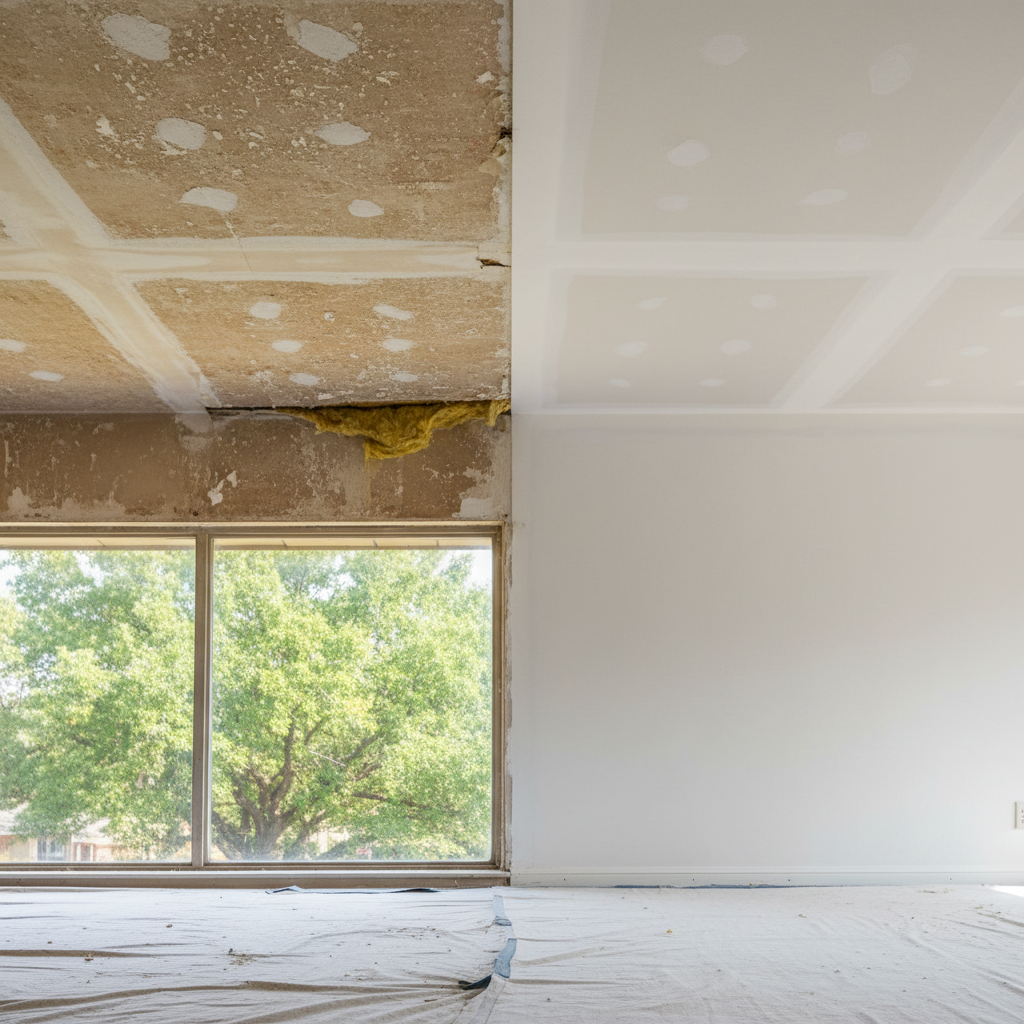
You walk into your living room, look up, and see that familiar ugly yellow-brown ring spreading across the drywall. Whether it came from a sudden supply line leak or heavy spring storm rains beating down on your roof, that stain means you have water damage overhead. Once the active leak is stopped, you are faced with a choice that every homeowner hates making: do you just patch the damaged spot, or do you tear out the section and replace the drywall completely?
The Patch-and-Paint Approach
Fixing a ceiling stain with a patch sounds great on paper because it saves time and keeps your weekend free. You scrape away any peeling texture, hit the stain with an oil-based primer so it does not bleed through, apply a small piece of drywall or mesh patching kit, and blend the popcorn or knockdown texture to match the surrounding ceiling.
Cost-wise, you are only spending a few dollars on materials and a couple of hours of labor. But here is what All Seasons Restoration Service has seen happen across neighborhoods in Royse City: houses here deal with shifting foundations due to our local clay soils, and temperature swings in the attic put constant stress on building materials. A superficial patch lacks structural integrity. If the drywall above got saturated and started sagging, a patch is just a band-aid. Within a year, hairline cracks often reappear right along the edges of the repair because the old, weakened drywall around it is not strong enough to hold the new compound tight.
Full Section Replacement
Cutting out the compromised drywall back to the nearest ceiling joists and hanging a fresh sheet is a messier job. It creates dust, requires tape and bed mudding, and takes multiple days to finish properly because you have to wait for compound layers to dry.
Why Local Conditions Matter
Up in your attic, summer heat gets brutal. If a leak went unnoticed for even a few days, trapped moisture creates prime conditions for mold growth on the backside of that drywall. Painting over it or throwing up a quick patch leaves that hidden mold trapped in your ceiling cavity. When we handle jobs through All Seasons Restoration Service, we always look at what is happening behind the surface. Cutting out the compromised material ensures you completely get rid of warped, softened gypsum board and any lurking mold spores.
Appearance-wise, a full replacement done by a pro leaves you with a flat, clean surface that will not show ghost lines under angled living room lighting. While it costs more upfront than a patch kit from the hardware store, you only have to pay for it once. If you try to save a buck today with a quick patch on severely weakened drywall, you will likely be looking at the same ugly stain or a sagging mess after the next heavy downpour hits Hunt County. Do it right the first time, check your roof or plumbing thoroughly, and put Water Damage Restoration Service over your head in Royse City.